
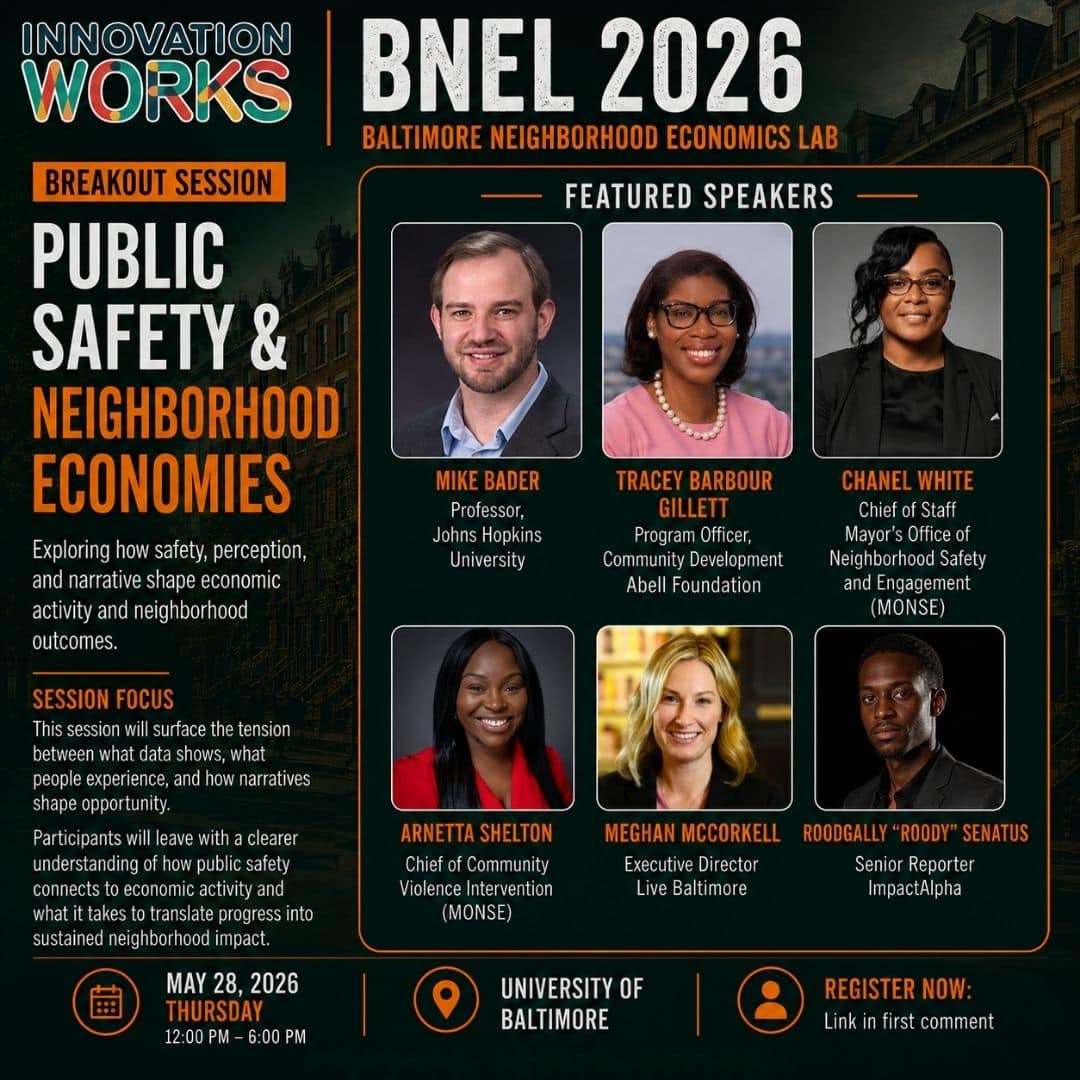
Public Safety & Neighborhood Economies
Public safety is directly connected to how neighborhoods are experienced, understood, and invested in. This session explores the relationship between safety, perception, economic activity, and neighborhood vitality in Baltimore.
Through data, city leadership reflections, panel discussion, and audience breakout conversations, participants will examine how public safety narratives shape resident confidence, business activity, neighborhood investment, and long-term economic opportunity.
Interactive Handout
Participants can download the interactive public safety discussion handout below.
Featured Speakers
Tracey Barbour Gillett
Program Officer, Community Development, Abell Foundation
Mike Bader
Professor, Johns Hopkins University
Arnetta Shelton
Chief of Community Violence Intervention, MONSE
Chanel White
Chief of Staff, MONSE
Meghan McCorkell
Executive Director, Live Baltimore
Roodgally “Roody” Senatus
Senior Reporter, ImpactAlpha
What to Expect
The session will begin with a welcome and framing conversation on why public safety is directly tied to neighborhood economies.
Data Grounding Presentation
Mike Bader will ground the session in data from the Baltimore Area Survey, including perception versus reality, neighborhood-level trends, and how safety perceptions influence economic activity.
City Leadership Reflections
Arnetta Shelton and Chanel White will offer city leadership reflections on progress made, current limitations, trust and perception gaps, and why economic opportunity matters long term.
Panel Discussion
Moderated by Tracey Barbour Gillett, the panel will explore public perception, lived experience, media narratives, resident attraction and retention, neighborhood confidence, and the relationship between safety and economic activity.
Audience Breakout Discussions
Participants will engage in small group discussions around storytelling and media narratives, small business experience and safety, and resident experience and neighborhood confidence.
Closing Reflection
The session will conclude with a report back from the groups and a closing reflection on narrative versus reality, public safety, and neighborhood vitality.